

Central Bhutan / A destination guide
Phobjikha
A wide glacial valley on the western slopes of the Black Mountains and the winter home of black-necked cranes.
A wide glacial valley on the western slopes of the Black Mountains and the winter home of black-necked cranes.
Highlights
- Gangtey Goenpa
- Black-necked cranes
- Valley trails
History and cultural significance
Gangtey Goenpa, on a ridge above the valley, was founded in the early 17th century by Pema Thinley, grandson of the treasure revealer Pema Lingpa. It is an important seat of the Nyingma tradition.
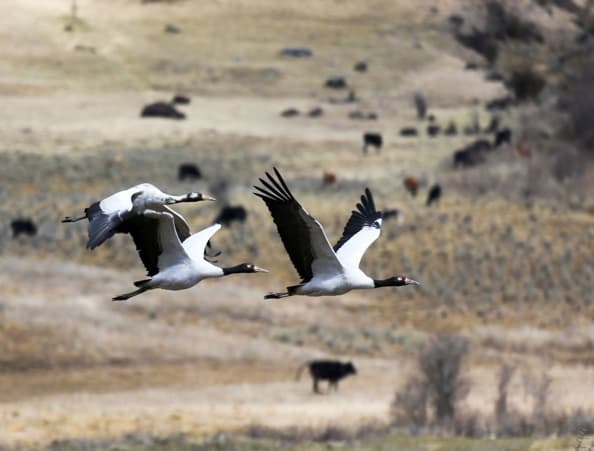
Each autumn, endangered black-necked cranes arrive from the Tibetan plateau to spend the winter in the valley’s wetlands. Their return is celebrated with the Black-necked Crane Festival in the courtyard of Gangtey Goenpa.
Phobjikha today
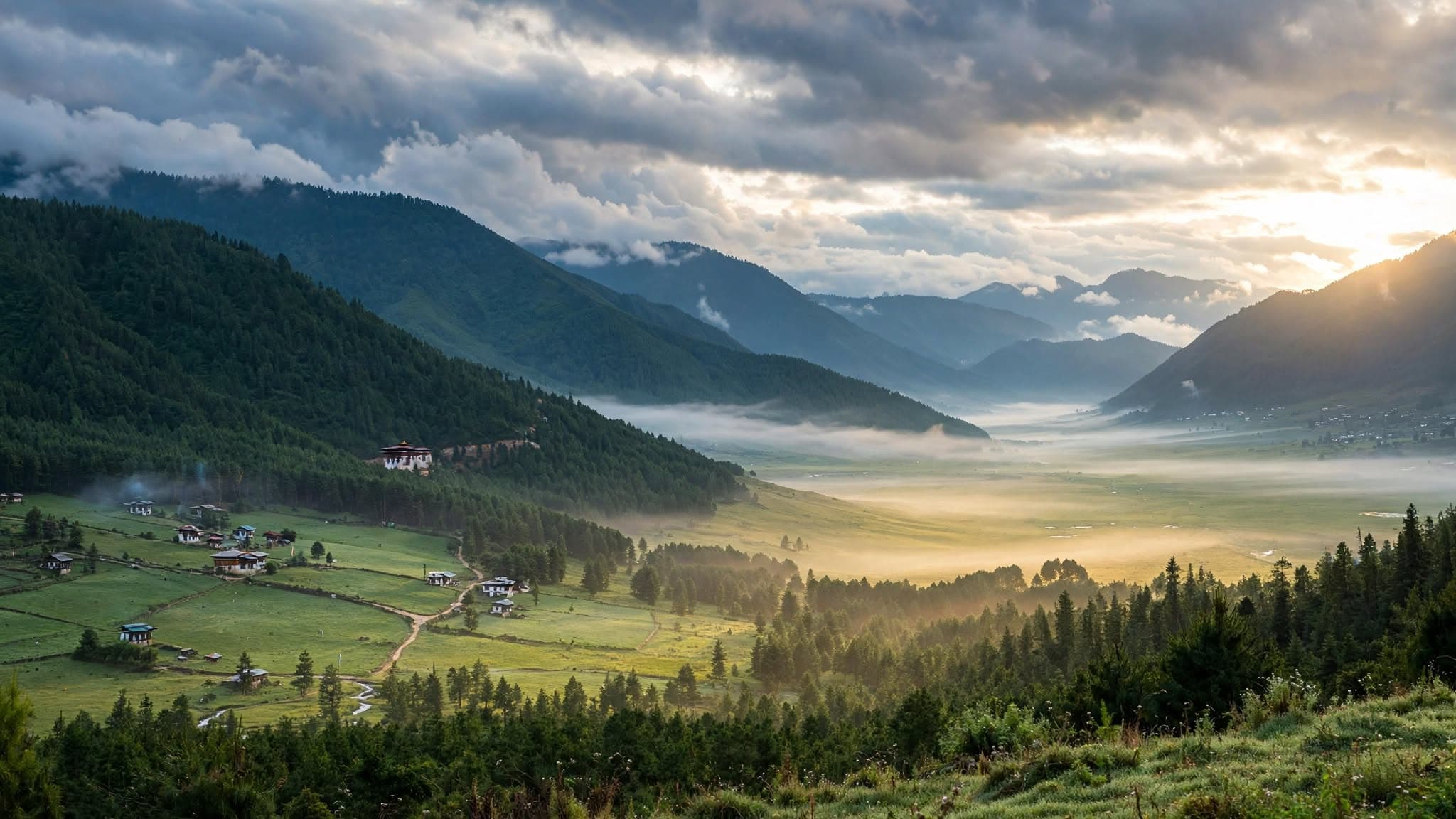
Phobjikha is broad, open and quiet, with farmhouses on the edge of marshland and pine-covered hills around it.
Much of the valley floor is protected for the cranes, and walking trails cross the fields and forest edges.
Places to visit
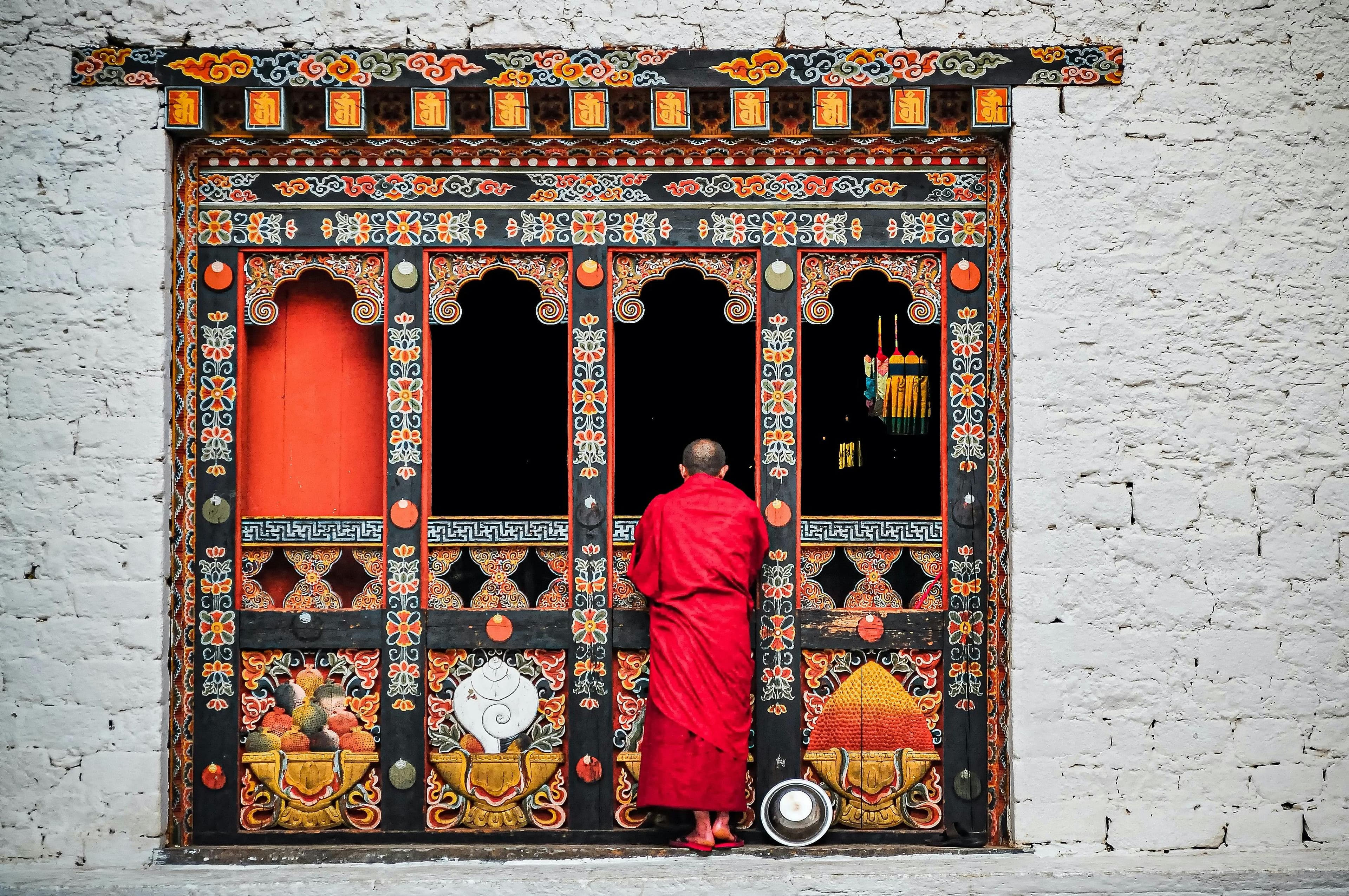
Gangtey Goenpa
The 17th-century monastery overlooking the valley, and the setting of the annual Black-necked Crane Festival.
The valley floor
Wetlands and fields where farmhouses sit on the edge of open grassland, framed by forested hills.
Black-necked cranes
The cranes winter in the valley’s wetlands, arriving in late autumn and leaving towards the end of winter.
Experiences
Crane watching
In winter the cranes can be seen feeding in the marshland from the valley edge.
Black-necked Crane Festival
Held each year on 11 November at Gangtey Goenpa, with dances that celebrate the cranes’ return.
Valley walks
Gentle trails cross the fields and forest edges around the valley.
Best time to visit
Spring (March to May)
Generally mild, with rhododendrons flowering on many hillsides. Several major tshechus are held in spring.
Summer (June to August)
The monsoon brings rain and lush green valleys. Some roads and high trails can be affected.
Autumn (September to November)
Usually clearer skies after the monsoon and a popular time for trekking and festivals.
Winter (December to February)
Cold, often dry days, with snow possible on the passes and at higher elevations.
Phobjikha seasonal note: The cranes are usually present from late autumn to late winter; the festival falls on 11 November.
Published journeys that include this destination
The following 4 published journeys name Phobjikha in the route or itinerary. The destination page links only to journeys where the itinerary names the place. Experiences listed above are not automatically included in every journey.
The Western Valleys Circuit
Eight days across the valleys of western Bhutan: Paro, Thimphu, Punakha, Phobjikha and Haa. Fortresses and temples sit alongside high road passes, village life and the walk up to Taktsang, with time to take each place in.
Duration: 8 days / 7 nights Season listed: Spring and autumn Difficulty: Moderate Other listed destinations: Paro, Thimphu, Punakha, Phobjikha Valley, Haa Valley
Chorten Kora and Eastern Bhutan Discovery
Fourteen days in eastern Bhutan and beyond, timed for the Chorten Kora festival. The route brings together the festival, the weaving traditions of the east, highland communities and major cultural sites further west.
Duration: 14 days / 13 nights Other listed destinations: Trashigang, Mongar, Lhuentse, Bumthang, Punakha, Thimphu, Paro
Black-Necked Crane Festival Escape
A seven-day winter journey that pairs sightseeing in Thimphu with time in Phobjikha Valley, where black-necked cranes spend the winter.
Duration: 7 days / 6 nights Other listed destinations: Thimphu, Phobjikha Valley
Bhutan on Two Wheels
Seven days seeing western Bhutan by bicycle. Road rides link Paro, Thimphu and Punakha, with stops at dzongs, temples and villages and a long descent from Dochula.
Duration: 7 days / 6 nights Season listed: Spring (March–May) and autumn (September–November) Other listed destinations: Paro, Thimphu, Punakha, Wangdue Phodrang
Plan a visit to Phobjikha
The website invites visitors to share their dates and interests so the team can suggest how Phobjikha could fit into a route. Contact the travel team for a current itinerary and details.
Travel Finder Tours
Plan a visit to Phobjikha
Share your dates and interests, and our travel team can help you plan a current itinerary.
Plan with an advisor