
Western Bhutan / A destination guide
Thimphu
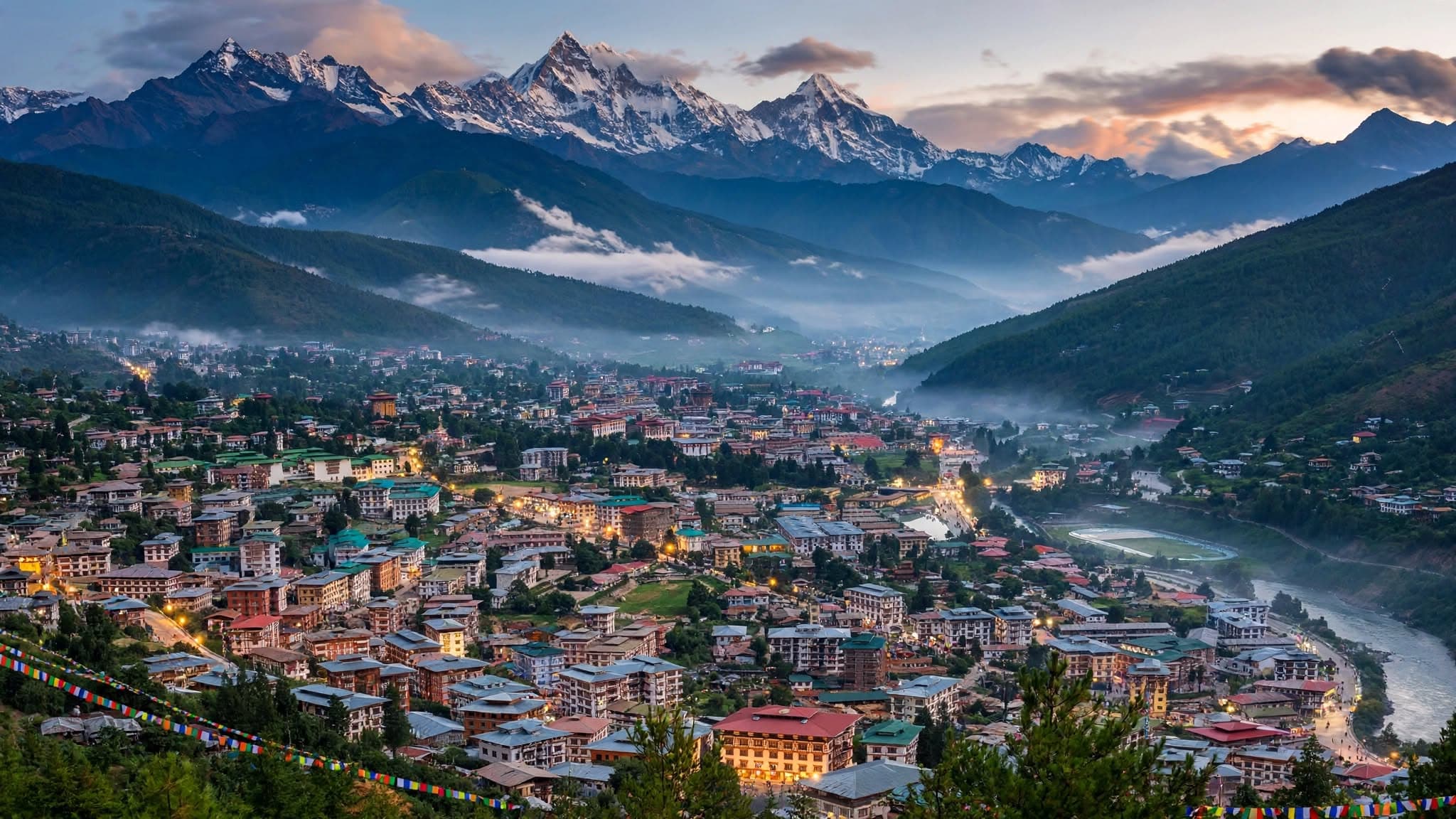
Bhutan’s capital since 1955, where Tashichho Dzong sits beside markets, monuments and the national archery ground.
Bhutan’s capital since 1955, where Tashichho Dzong sits beside markets, monuments and the national archery ground.
Highlights
- Tashichho Dzong
- National Memorial Chorten
- Buddha Dordenma
History and cultural significance
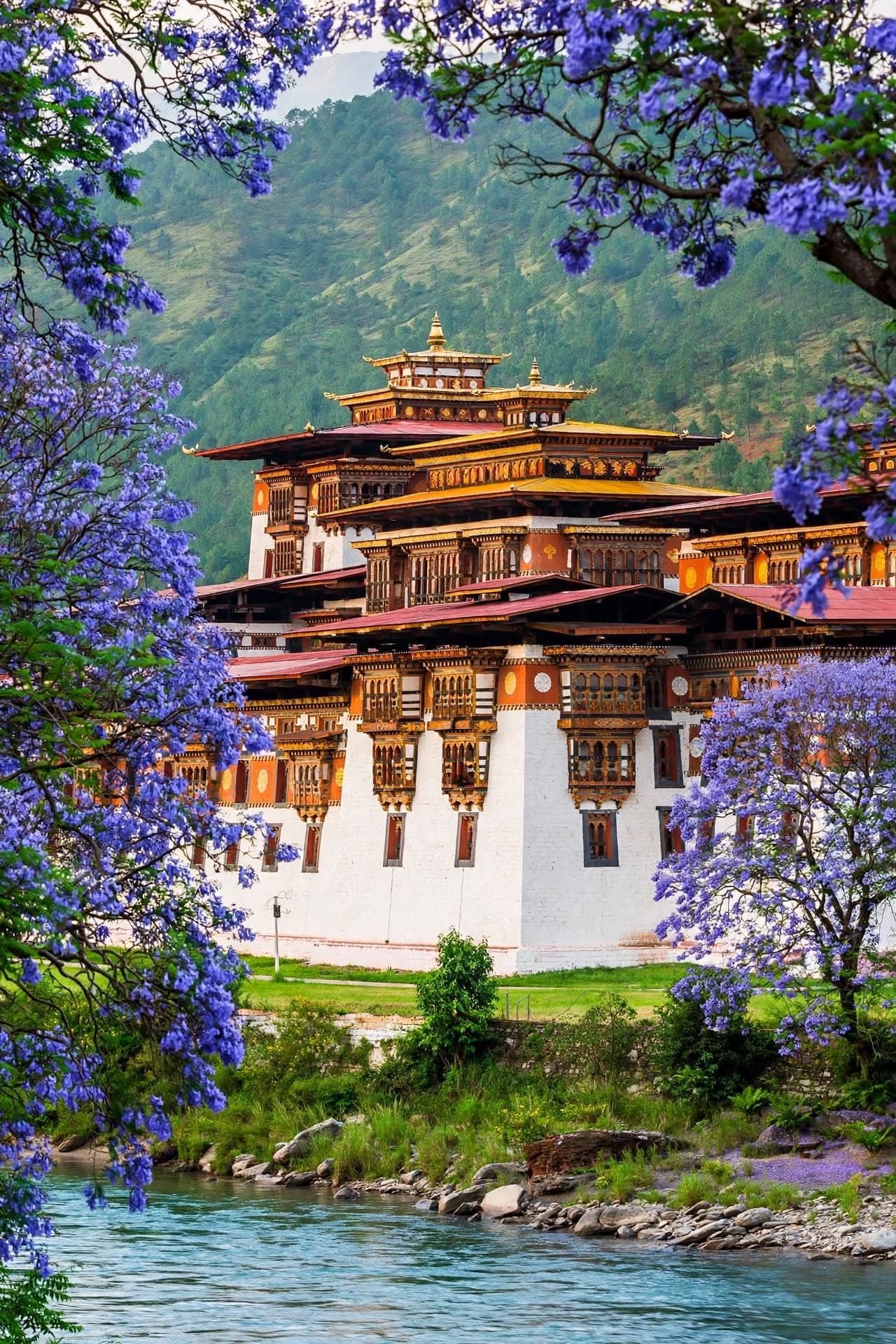
Thimphu became the capital of Bhutan in 1955, taking over the role from Punakha. Tashichho Dzong, on the west bank of the Wang Chhu, is the seat of the government and of the King’s office, and the summer residence of the Central Monk Body.
South of the city, Simtokha Dzong was built in 1629 by Zhabdrung Ngawang Namgyal and is among the oldest dzongs in the country. The National Memorial Chorten was completed in 1974 in memory of the Third King, Jigme Dorji Wangchuck.
Thimphu today
Thimphu is the country’s largest town, yet it keeps a human scale: traffic police still direct the main junction, and traditional architecture is required for new buildings.
It is a natural place to meet Bhutanese culture up close, from the weekend market to archery matches and weaving.
Places to visit
Tashichho Dzong
The seat of Bhutan’s government and the summer home of the Central Monk Body, set among lawns beside the Wang Chhu.
National Memorial Chorten
Completed in 1974 in memory of the Third King. Throughout the day, residents walk clockwise around the white chorten in prayer.
Buddha Dordenma
A giant seated Buddha Shakyamuni statue on a ridge above the southern end of the valley, with wide views over the city.
Simtokha Dzong
Built in 1629 by Zhabdrung Ngawang Namgyal, this compact fortress guarding the valley is one of the oldest dzongs in Bhutan.
Centenary Farmers Market
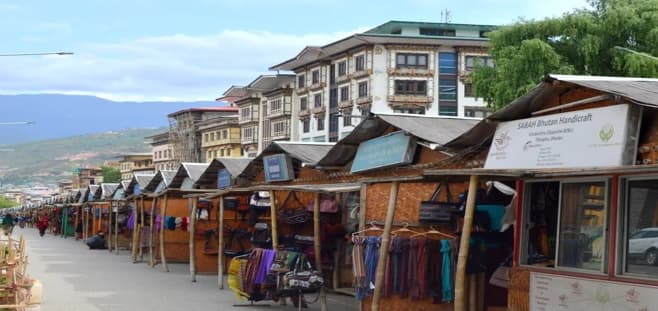
The riverside market where farmers from across the region sell vegetables, chillies, cheese and dried goods.
Changlimithang Archery Ground
Archery is Bhutan’s national sport, and matches here come with songs, dances and good-natured rivalry.
Experiences
Archery
Watch teams compete over long distances, with cheering and celebration after every hit.
Weaving and crafts
Bhutanese textiles such as the kira are woven by hand on traditional looms.
Thimphu Tshechu
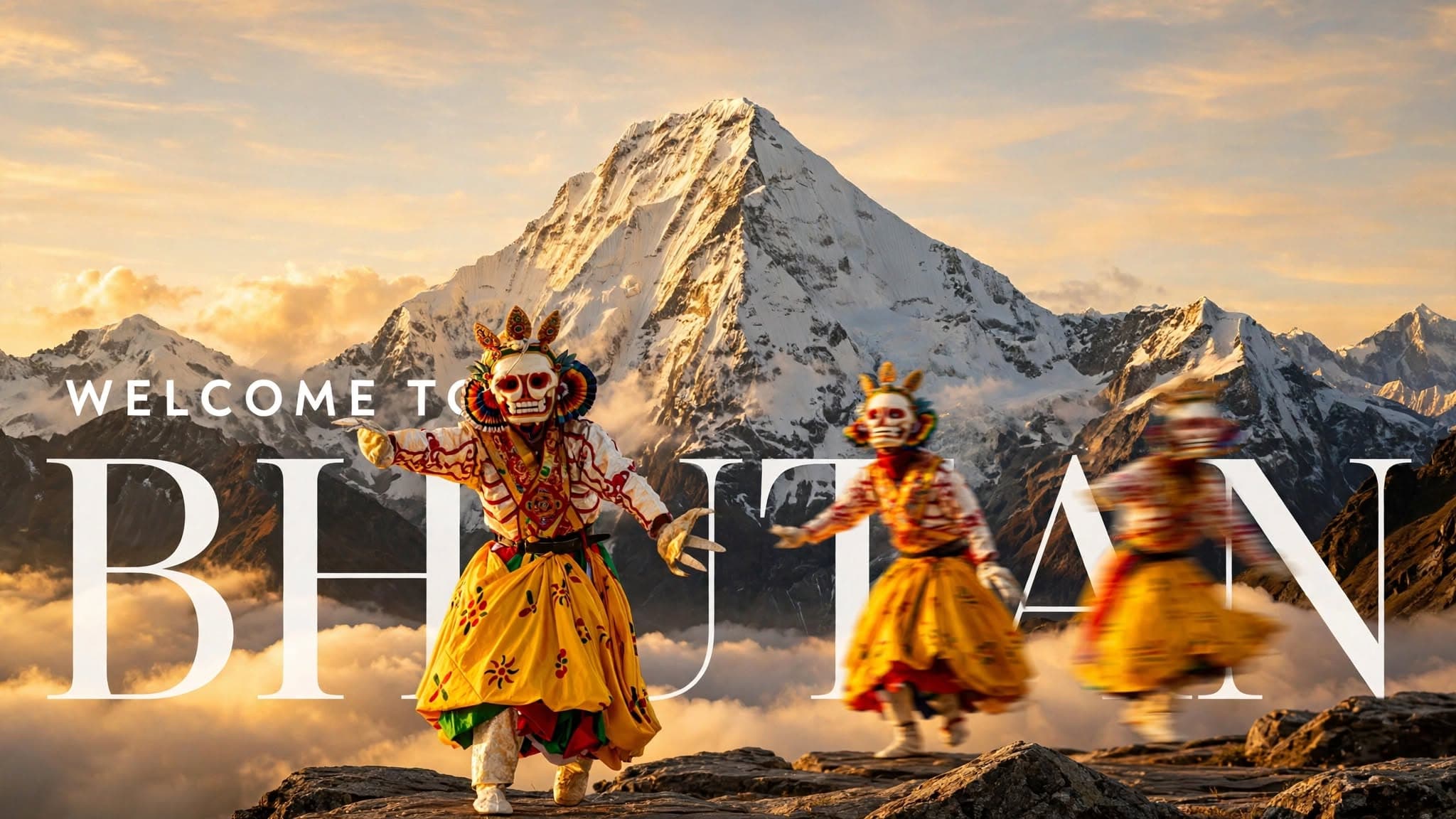
A major autumn festival of masked dances in the courtyard of Tashichho Dzong.
Best time to visit
Spring (March to May)
Generally mild, with rhododendrons flowering on many hillsides. Several major tshechus are held in spring.
Summer (June to August)
The monsoon brings rain and lush green valleys. Some roads and high trails can be affected.
Autumn (September to November)
Usually clearer skies after the monsoon and a popular time for trekking and festivals.
Winter (December to February)
Cold, often dry days, with snow possible on the passes and at higher elevations.
Thimphu seasonal note: Autumn brings the Thimphu Tshechu and some of the clearest weather of the year; festival dates change annually.
Published journeys that include this destination
The following 12 published journeys name Thimphu in the route or itinerary. The destination page links only to journeys where the itinerary names the place. Experiences listed above are not automatically included in every journey.
The Western Valleys Circuit
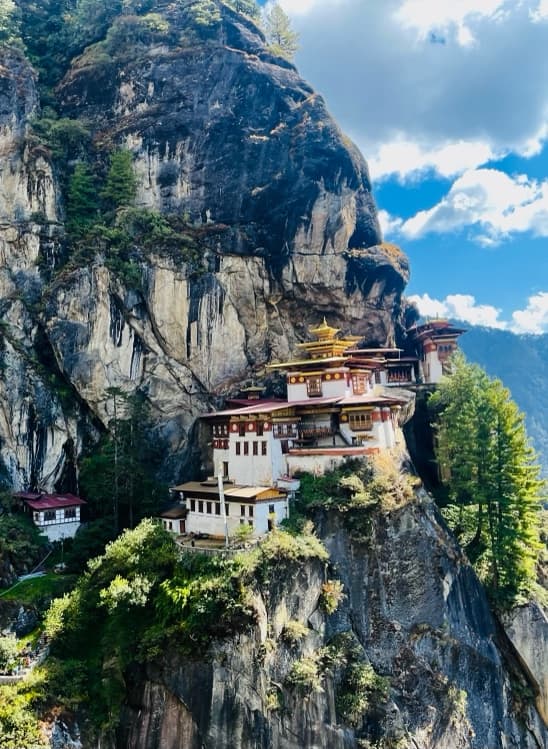
Eight days across the valleys of western Bhutan: Paro, Thimphu, Punakha, Phobjikha and Haa. Fortresses and temples sit alongside high road passes, village life and the walk up to Taktsang, with time to take each place in.
Duration: 8 days / 7 nights Season listed: Spring and autumn Difficulty: Moderate Other listed destinations: Paro, Punakha, Phobjikha Valley, Haa Valley
The Essential Valley Escape
A four-day, three-night introduction to western Bhutan, focused on Paro and Thimphu. It suits travellers who want a first look at the country’s cultural heartland in a short stay.
Duration: 4 days / 3 nights Other listed destinations: Paro
The Happiness Route
Six days linking Thimphu, Punakha and Paro. The journey moves from the capital’s museums and viewpoints over Dochula to Punakha’s river valley, and ends with the walk to Taktsang.
Duration: 6 days / 5 nights Season listed: Spring and autumn Difficulty: Moderate Other listed destinations: Paro, Punakha, Wangdue Phodrang
Thimphu Festival and Capital Culture
A seven-day journey timed around the Thimphu Tshechu, the capital’s annual festival, with time to explore Thimphu itself. Festival dates change from year to year, so we plan around the published dates for your year of travel.
Duration: 7 days
Trashigang Mask Dance Journey
Twelve days from east to west, built around the Trashigang Tshechu. The journey pairs the festival’s mask dances with eastern valleys and highland communities, the temples of Bumthang and well-known landmarks in western Bhutan.
Duration: 12 days Other listed destinations: Trashigang, Trashi Yangtse, Mongar, Lhuentse, Bumthang, Punakha, Paro
Chorten Kora and Eastern Bhutan Discovery
Fourteen days in eastern Bhutan and beyond, timed for the Chorten Kora festival. The route brings together the festival, the weaving traditions of the east, highland communities and major cultural sites further west.
Duration: 14 days / 13 nights Other listed destinations: Trashigang, Mongar, Lhuentse, Bumthang, Punakha, Paro
Black-Necked Crane Festival Escape
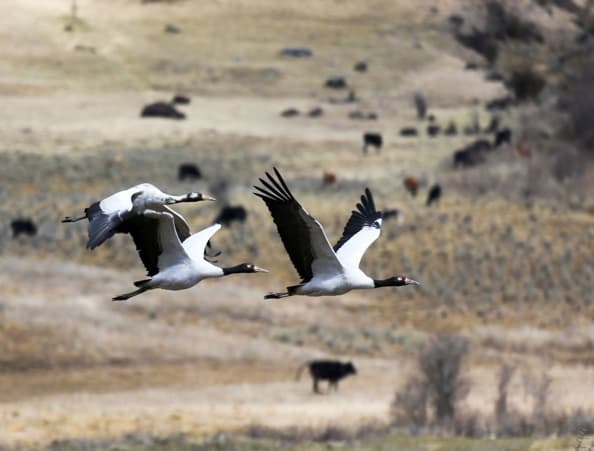
A seven-day winter journey that pairs sightseeing in Thimphu with time in Phobjikha Valley, where black-necked cranes spend the winter.
Duration: 7 days / 6 nights Other listed destinations: Phobjikha Valley
Jomolhari Mountain Trail
Eight days that begin with Paro’s cultural landmarks and the Taktsang hike, then head onto the trail. The trek follows the Paro Chhu upstream through villages and forest into high country below Jomolhari, with fully serviced camps.
Duration: 8 days Season listed: April–June and September–November Difficulty: Medium Other listed destinations: Paro, Gasa, Laya
Snowman Wilderness Expedition
A 28-day expedition across the remote high Himalaya of northern Bhutan, through the Lingshi, Laya and Lunana regions. Rated extremely hard, with a high point of about 5,470 m at Rinchen Zoe La, it is for experienced high-altitude trekkers.
Duration: 28 days Difficulty: Extremely hard Other listed destinations: Paro, Gasa, Trongsa, Punakha
Druk Path and Tsaluna Trek
A nine-day trekking journey between Paro and Thimphu that combines the Druk Path with the Tsaluna trail. The plan can be adjusted; we share the current route, camps and altitude profile on request.
Duration: 9 days, customizable Other listed destinations: Paro
Bhutan on Two Wheels
Seven days seeing western Bhutan by bicycle. Road rides link Paro, Thimphu and Punakha, with stops at dzongs, temples and villages and a long descent from Dochula.
Duration: 7 days / 6 nights Season listed: Spring (March–May) and autumn (September–November) Other listed destinations: Paro, Punakha, Wangdue Phodrang, Phobjikha
Rivers of the Dragon Kingdom
Seven days on the rivers of western Bhutan for intermediate to expert paddlers, with sightseeing in Paro, Thimphu and Punakha. River sections range widely in difficulty, and some run only in certain seasons.
Duration: 7 days Season listed: Summer (June–August) for Paro and Wangduephodrang rivers; select sections may be possible March–April and November–December Difficulty: Intermediate to expert paddlers Other listed destinations: Paro, Punakha, Wangdue Phodrang
Plan a visit to Thimphu
The website invites visitors to share their dates and interests so the team can suggest how Thimphu could fit into a route. Contact the travel team for a current itinerary and details.
Travel Finder Tours
Plan a visit to Thimphu
Share your dates and interests, and our travel team can help you plan a current itinerary.
Plan with an advisor